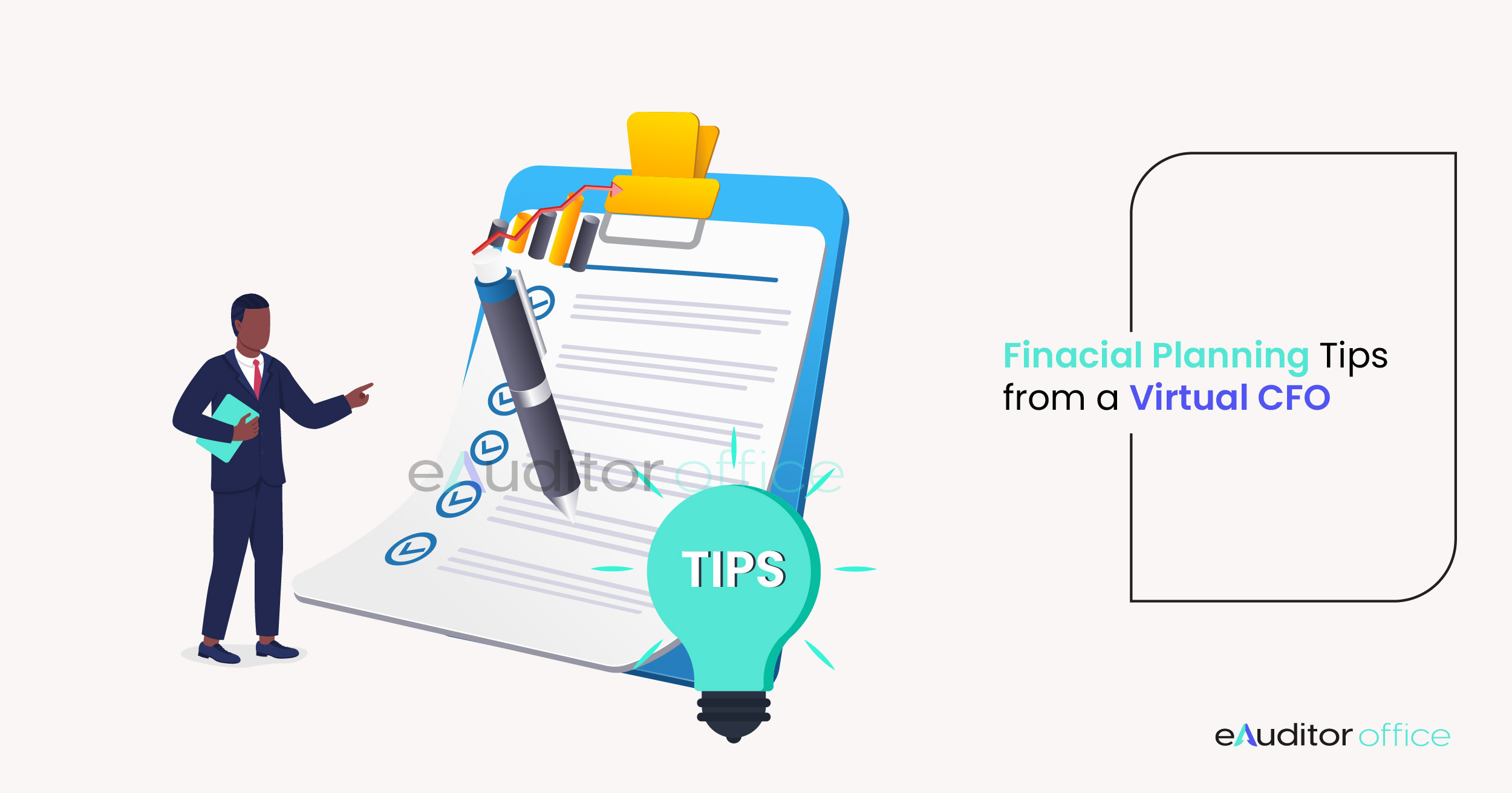
In today’s fast-paced and ever-evolving business landscape, financial planning is more crucial than ever. Whether you’re a small business owner or managing a large corporation, having a solid financial strategy can be the difference between success and failure. At eAuditor Office, we understand the intricacies of financial management, and as a leading Virtual CFO service provider, we are here to share some essential financial planning tips to help you master your finances.
Introduction to Virtual CFO Services
A Virtual CFO (Chief Financial Officer) provides the same services as a traditional CFO but operates remotely. This modern approach allows businesses to access top-tier financial expertise without the overhead costs associated with a full-time, in-house CFO. Virtual CFOs bring a wealth of knowledge and experience, helping businesses streamline their financial operations, improve profitability, and achieve long-term growth.
The Importance of Financial Planning
Financial planning is the cornerstone of any successful business strategy. It involves forecasting future financial performance, setting realistic goals, and devising strategies to achieve them. Effective financial planning can help you:
- Ensure liquidity: By managing cash flow efficiently, you can meet your short-term obligations and avoid financial crises.
- Optimize profitability: Through cost management and revenue optimization, you can maximize your profits.
- Plan for growth: Financial planning allows you to allocate resources effectively, ensuring sustainable growth.
- Mitigate risks: Identifying potential financial risks and developing mitigation strategies can protect your business from unforeseen challenges.
Key Financial Planning Tips from a Virtual CFO
1. Establish Clear Financial Goals
Setting clear, measurable financial goals is the first step in any financial planning process. These goals should align with your overall business objectives and be broken down into short-term, medium-term, and long-term targets. For example:
- Short-term goals: Improve cash flow, reduce operational costs, increase sales by a specific percentage.
- Medium-term goals: Expand into new markets, launch new products or services, improve profit margins.
- Long-term goals: Achieve financial independence, ensure sustainable growth, prepare for potential mergers or acquisitions.
2. Create a Detailed Budget
A well-structured budget is essential for effective financial management. It provides a roadmap for your financial activities, helping you control expenses and allocate resources efficiently. When creating a budget:
- Analyze historical data: Review past financial performance to identify trends and areas for improvement.
- Forecast future income and expenses: Use realistic assumptions to predict future financial performance.
- Monitor and adjust: Regularly compare actual performance against your budget and make necessary adjustments.
3. Implement Cash Flow Management Strategies
Cash flow is the lifeblood of any business. Without adequate cash flow, even profitable businesses can struggle to meet their obligations. Implementing effective cash flow management strategies can help you maintain a healthy financial position. Consider the following tips:
- Improve receivables: Accelerate cash inflows by offering incentives for early payments and implementing strict credit policies.
- Manage payables: Optimize cash outflows by negotiating favorable payment terms with suppliers and taking advantage of early payment discounts.
- Maintain a cash reserve: Set aside a portion of your profits as a cash reserve to cover unexpected expenses.
4. Leverage Financial Technology
In the digital age, leveraging financial technology (FinTech) can significantly enhance your financial planning and management capabilities. FinTech tools can help you automate processes, improve accuracy, and gain real-time insights into your financial performance. Some popular FinTech solutions include:
- Accounting software: Tools like QuickBooks, Xero, and FreshBooks can streamline your accounting processes.
- Budgeting and forecasting tools: Solutions like Adaptive Insights and Planful can help you create detailed budgets and forecasts.
- Cash flow management tools: Platforms like Float and Pulse can provide real-time cash flow insights.
5. Conduct Regular Financial Reviews
Regular financial reviews are essential for maintaining financial health and ensuring you stay on track to achieve your goals. These reviews should include:
- Performance analysis: Compare actual performance against your budget and financial goals.
- Variance analysis: Identify and investigate any significant variances between actual and budgeted performance.
- Strategic adjustments: Make necessary adjustments to your financial strategies based on your analysis.
6. Plan for Tax Efficiency
Effective tax planning can help you minimize your tax liabilities and retain more of your hard-earned profits. Consider the following tax planning strategies:
- Take advantage of tax deductions: Identify and claim all eligible tax deductions to reduce your taxable income.
- Optimize your business structure: Choose the most tax-efficient business structure for your company (e.g., sole proprietorship, partnership, corporation).
- Plan for tax payments: Set aside funds throughout the year to cover your tax liabilities and avoid last-minute cash flow issues.
7. Prepare for the Unexpected
Unforeseen events can have a significant impact on your business. Having a contingency plan in place can help you navigate these challenges and protect your financial stability. Consider the following steps:
- Identify potential risks: Assess potential risks that could impact your business, such as economic downturns, natural disasters, or cybersecurity threats.
- Develop a risk management plan: Create a plan to mitigate these risks, including insurance coverage, emergency funds, and backup strategies.
- Regularly review and update: Continuously review and update your contingency plan to ensure it remains relevant.
8. Seek Professional Advice
Navigating the complexities of financial planning can be challenging. Seeking professional advice from a Virtual CFO can provide you with the expertise and guidance needed to make informed financial decisions. A Virtual CFO can:
- Provide strategic insights: Offer valuable insights and recommendations based on industry knowledge and experience.
- Enhance financial visibility: Provide real-time financial data and analysis to help you make informed decisions.
- Support long-term growth: Assist in developing and implementing strategies to achieve your long-term financial goals.
Conclusion
Effective financial planning is essential for business success, and leveraging the expertise of a Virtual CFO can provide you with the tools and insights needed to master your finances. By setting clear financial goals, creating a detailed budget, managing cash flow, leveraging FinTech, conducting regular reviews, planning for tax efficiency, preparing for the unexpected, and seeking professional advice, you can ensure your business’s financial health and long-term growth.
At eAuditor Office, we are committed to helping businesses in Tamil Nadu, especially in Chennai and Coimbatore, as well as Bangalore, achieve financial success. Our Virtual CFO services are designed to provide you with the expertise and support needed to navigate the complexities of financial management and achieve your business goals.
Ready to take your financial planning to the next level? Contact eAuditor Office today at info@eauditoroffice.com and let our team of experts help you master your finances and drive your business towards success.
By following these tips and leveraging the expertise of a Virtual CFO, you can ensure your business is well-equipped to navigate the complexities of financial management and achieve long-term success. Contact eAuditor Office today at info@eauditoroffice.com to learn more about how our Virtual CFO services can help you master your finances and drive your business towards success.
Additional Resources
To further enhance your financial planning knowledge, consider exploring the following resources:
- Books: “Financial Intelligence” by Karen Berman and Joe Knight, “The CFO Guidebook” by Steven M. Bragg.
- Online Courses: Financial Planning & Analysis (FP&A) courses on Coursera and Udemy.
- Industry Reports: Stay updated with the latest financial trends and insights by subscribing to industry reports from reputable sources like Deloitte and PwC.
By following these tips and leveraging the expertise of a Virtual CFO, you can ensure your business is well-equipped to navigate the complexities of financial management and achieve long-term success. Contact eAuditor Office today at info@eauditoroffice.com to learn more about how our Virtual CFO services can help you master your finances and drive your business towards success.