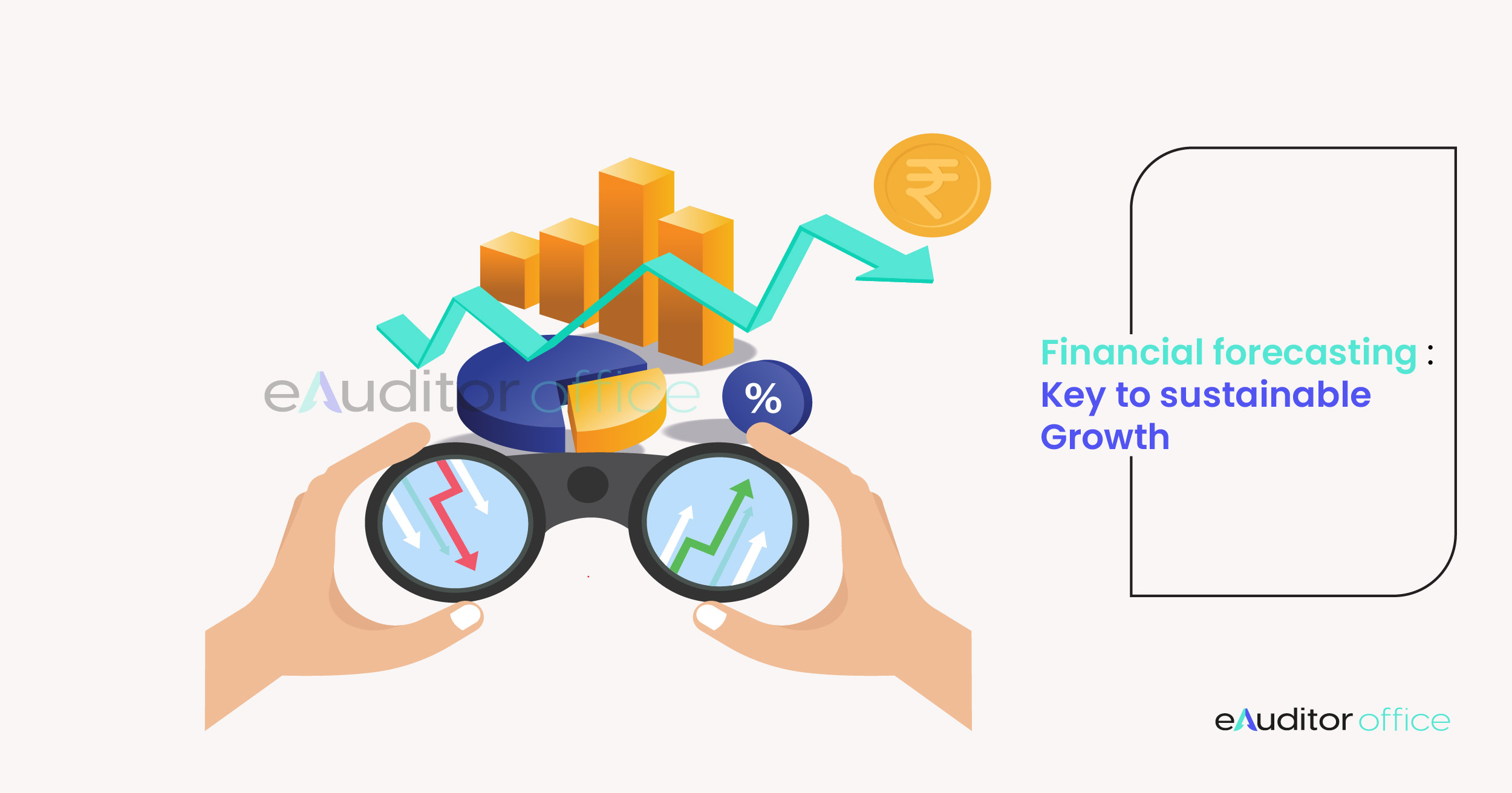
Financial Forecasting: The Key to Sustainable Growth
In today’s fast-paced business world, staying ahead of the curve requires more than just intuition and good luck. Companies that thrive are those that can anticipate changes, plan accordingly, and adapt to new circumstances swiftly. This is where financial forecasting comes into play. By predicting future financial conditions and performance, businesses can make informed decisions that drive sustainable growth. Let’s dive into the importance of financial forecasting, its methodologies, and how it can be the cornerstone of your business strategy.
What is Financial Forecasting?
Financial forecasting is the process of estimating or predicting a company’s future financial performance based on historical data, current market trends, and expected future developments. This involves projecting key financial metrics such as revenue, expenses, profits, and cash flow.
Why Financial Forecasting is Crucial
Informed Decision-Making: Financial forecasts provide valuable insights that help businesses make strategic decisions about investments, expansions, hiring, and other critical activities.
Risk Management: By identifying potential financial pitfalls and opportunities, companies can mitigate risks and capitalize on favorable conditions.
Resource Allocation: Accurate forecasts allow businesses to allocate resources efficiently, ensuring that funds are directed toward the most promising ventures.
Investor Confidence: Consistent and reliable financial forecasts can build trust and confidence among investors, lenders, and other stakeholders.
Types of Financial Forecasting
Short-Term Forecasting: Typically covers a period of up to one year and focuses on predicting cash flow, revenue, and expenses. This type of forecasting is essential for day-to-day operations and managing working capital.
Medium-Term Forecasting: Spans one to three years and is used for budgeting and planning purposes. It helps businesses set realistic financial goals and develop strategies to achieve them.
Long-Term Forecasting: Covers periods of three years or more. Long-term forecasts are crucial for strategic planning, assessing the feasibility of large projects, and preparing for major market shifts.
Key Components of Financial Forecasting
Revenue Forecasting: Estimating future sales based on historical data, market analysis, and industry trends. This involves analyzing factors such as market demand, pricing strategies, and competitive landscape.
Expense Forecasting: Predicting future costs, including fixed and variable expenses. This helps businesses identify areas where they can reduce costs and improve profitability.
Profit Forecasting: Projecting future profits by subtracting predicted expenses from forecasted revenues. This is essential for assessing the overall financial health of the business.
Cash Flow Forecasting: Estimating the inflows and outflows of cash to ensure that the business has sufficient liquidity to meet its obligations. Cash flow forecasts help prevent cash shortages and ensure smooth operations.
Financial Forecasting Methods
Qualitative Methods: These methods rely on expert opinions, market research, and subjective judgment. They are useful when historical data is limited or when predicting the impact of unprecedented events. Common qualitative methods include the Delphi method, market research, and expert panels.
Quantitative Methods: These methods use mathematical models and statistical techniques to analyze historical data and identify trends. They are more objective and data-driven. Common quantitative methods include:
- Time Series Analysis: Involves analyzing historical data to identify patterns and trends that can be projected into the future.
- Regression Analysis: Examines the relationship between different variables to predict future outcomes.
- Econometric Models: Combine economic theory with statistical methods to forecast economic variables such as GDP, inflation, and interest rates.
Best Practices for Financial Forecasting
Use Reliable Data: Ensure that your forecasts are based on accurate and up-to-date information. Inaccurate data can lead to misleading predictions and poor decision-making.
Incorporate Multiple Scenarios: Develop multiple forecasts based on different assumptions and scenarios. This helps businesses prepare for a range of possible outcomes and increases flexibility.
Regularly Update Forecasts: Financial forecasts should be updated regularly to reflect changes in the market, business environment, and internal conditions. Regular updates ensure that forecasts remain relevant and useful.
Leverage Technology: Utilize financial forecasting software and tools to automate data collection, analysis, and reporting. This can save time, reduce errors, and improve the accuracy of your forecasts.
Collaborate with Stakeholders: Involve key stakeholders in the forecasting process to ensure that forecasts are realistic and aligned with business goals. Collaboration fosters a sense of ownership and accountability.
Case Study: Financial Forecasting in Action
Consider a mid-sized manufacturing company planning to expand its operations. By conducting a thorough financial forecast, the company can:
Estimate Future Revenue: Analyze historical sales data, market trends, and customer demand to predict future revenue. This helps the company set realistic sales targets and develop effective marketing strategies.
Assess Capital Requirements: Determine the amount of capital needed for the expansion, including costs for new equipment, facilities, and personnel. This ensures that the company secures sufficient funding and avoids cash flow problems.
Evaluate Profitability: Project future profits by estimating revenue and expenses. This helps the company assess the financial viability of the expansion and make informed decisions about whether to proceed.
Plan for Contingencies: Develop multiple scenarios based on different assumptions, such as changes in market conditions, supply chain disruptions, and economic downturns. This prepares the company for potential challenges and ensures that it can adapt to changing circumstances.
Financial Forecasting Tools and Software
Microsoft Excel: A versatile tool that allows businesses to create custom financial models and perform detailed analysis. Excel is widely used for its flexibility and accessibility.
QuickBooks: An accounting software that includes financial forecasting features. QuickBooks is ideal for small to mid-sized businesses looking for an integrated solution for managing finances and generating forecasts.
PlanGuru: A specialized financial forecasting software that offers advanced features such as budgeting, forecasting, and financial analysis. PlanGuru is suitable for businesses of all sizes.
Adaptive Insights: A cloud-based planning and forecasting solution that enables businesses to create accurate and dynamic financial forecasts. Adaptive Insights is ideal for larger organizations with complex forecasting needs.
Prophix: A corporate performance management software that includes financial forecasting, budgeting, and reporting capabilities. Prophix is suitable for businesses looking for a comprehensive solution to manage their financial planning processes.
Challenges in Financial Forecasting
Data Quality: Inaccurate or incomplete data can lead to unreliable forecasts. Ensuring data quality is essential for producing accurate predictions.
Market Uncertainty: Rapid changes in market conditions, such as economic fluctuations, regulatory changes, and technological advancements, can impact the accuracy of forecasts.
Complexity: Financial forecasting can be complex, especially for large organizations with multiple revenue streams and cost centers. Simplifying the forecasting process and using appropriate tools can help manage this complexity.
Bias: Forecasts can be influenced by cognitive biases, such as optimism bias or anchoring. Involving multiple stakeholders and using objective data can help mitigate the impact of bias.
The Future of Financial Forecasting
Advancements in technology are transforming the field of financial forecasting. Artificial intelligence (AI) and machine learning (ML) are being increasingly used to enhance the accuracy and efficiency of forecasts. These technologies can analyze vast amounts of data, identify patterns, and make predictions with greater precision.
Conclusion: The Path to Sustainable Growth
Financial forecasting is not just a tool for predicting future performance; it is a strategic imperative for businesses aiming for sustainable growth. By leveraging accurate and timely forecasts, companies can make informed decisions, manage risks, allocate resources effectively, and build investor confidence. Embracing the best practices and utilizing advanced forecasting tools can provide a competitive edge and pave the way for long-term success.
If you’re ready to take your business to the next level with accurate financial forecasting, our team at eAuditor Office is here to help. Contact us at info@eauditoroffice.com to learn more about our comprehensive financial forecasting services and how we can assist you in achieving sustainable growth.