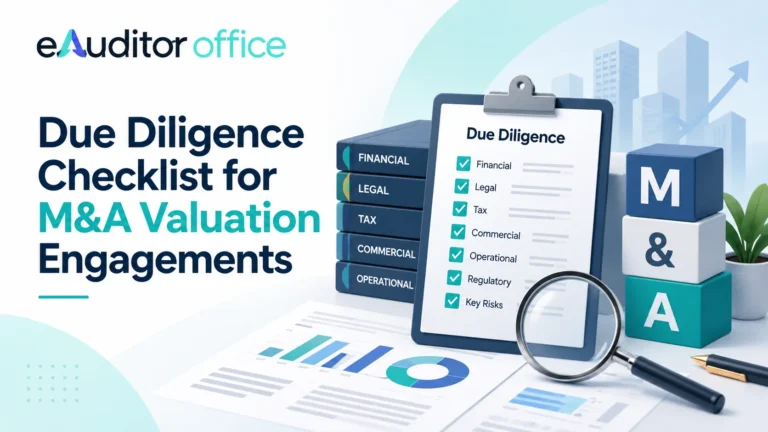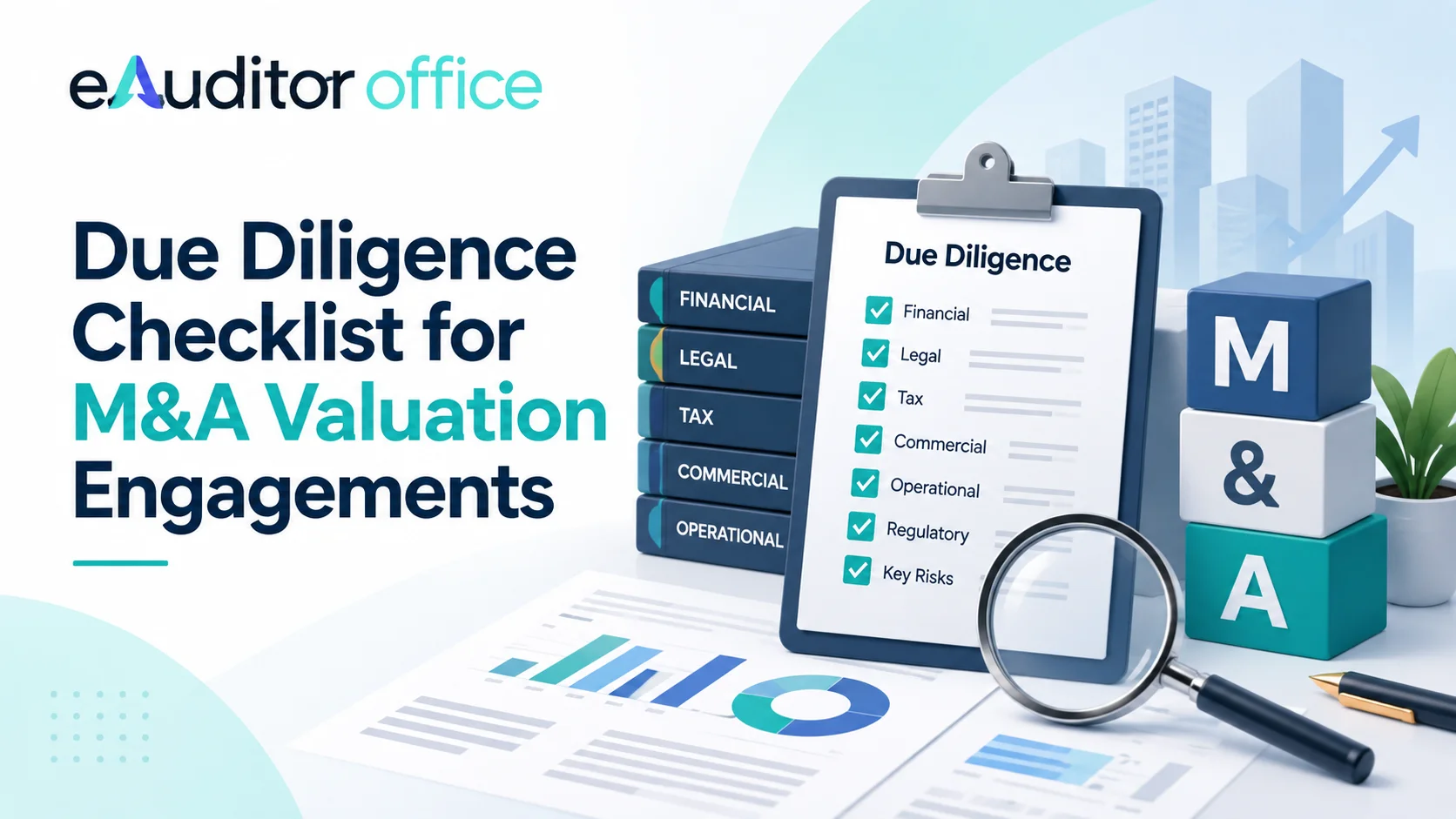
An M&A valuation is only as reliable as the information behind it. If the cap table is outdated, forecasts are unsupported or liabilities are missing, a technically correct model can still produce the wrong answer.
A practical due diligence checklist M&A teams can use should cover the valuation purpose, ownership, financial quality, forecasts, debt, tax, legal exposure and transaction terms. Early checks give the valuer a cleaner basis for selecting methods and assumptions.
If you are planning an acquisition, merger, business sale or restructuring, speak with E-Auditor about M&A Advisory for support with due diligence coordination, valuation inputs, deal structuring and transaction compliance.
What Is Due Diligence Before An M&A Valuation?
Pre-valuation due diligence is the organised review of the target company’s records before detailed valuation work begins. Its purpose is not to negotiate the final price. It is to establish what is being valued, identify information gaps and separate normal business performance from one-off or non-business items.
It helps the adviser decide whether forecasts can be used, which adjustments are needed and which risks require sensitivity analysis. The scope should match the proposed transaction.
Why Should Due Diligence Happen Before Valuation?
Starting too early creates rework. Revenue may change after contracts are reviewed, while debt-like items may surface after enterprise value has been discussed. Tax demands or promoter-related transactions can also change the risk assessment.
Preparation also supports independence. Management can explain assumptions, but the valuer must assess them rather than adopt a desired price. Under Section 247 of the Companies Act, 2013, valuations required under the Act must be performed by a registered valuer appointed by the audit committee or, without one, the board. The provision also requires impartiality, due diligence and disclosure of interests.
Due Diligence Checklist For An M&A Valuation Engagement
1. Define The Valuation Purpose And Scope
Write down why the valuation is required. A price discussion, share swap, regulatory filing, accounting allocation and fairness assessment may use different scopes or reporting requirements.
Confirm the date, entities covered, basis of value, intended users and applicable law. State whether the assignment requires enterprise value, equity value, per-share value or an exchange ratio. Analyse each share class separately.
2. Verify Corporate And Ownership Records
Collect constitutional documents, statutory registers, annual filings, board minutes and shareholder agreements. Reconcile legal share capital with the accounting records and latest cap table.
Include preference shares, partly paid shares, options, warrants and convertibles. Review voting rights, liquidation preferences, transfer restrictions and commitments to issue securities. Even a small error can change per-share value.
3. Review Historical Financial Information
Provide three recent years of audited statements, management accounts and tax returns, plus current year-to-date results. Reconcile management reports with audited numbers.
Check accounting-policy changes, unusual entries, corrections and audit qualifications. Break down revenue and profit by the categories that drive value.
4. Test The Quality Of Earnings
Reported EBITDA is rarely the final input. Identify one-time items, promoter remuneration outside market levels, personal expenses, discontinued operations and related-party transactions.
Check whether revenue is recurring or concentrated. Review returns, credit notes, cut-off practices and overdue receivables. The objective is maintainable earnings supported by evidence.
5. Challenge Forecasts And Business Plans
Forecast profit and loss statements, balance sheets and cash flows should use connected assumptions. Link sales projections to capacity, pricing, headcount and working capital.
Compare past budgets with actual results and explain large misses. Prepare base and downside cases for material variables such as growth, margin, churn or capital expenditure.
6. Reconcile Debt, Cash And Working Capital
List loans, accrued interest, leases, guarantees and other financing obligations. Identify restricted cash and balances unavailable to the buyer.
Estimate normal working capital using relevant history and seasonality. Old receivables, excess inventory and overdue dues may need separate treatment. Agree which items are debt-like, cash-like or normal working capital before headline value anchors negotiations.
Need A Deal-Ready Financial Review? E-Auditor’s M&A Advisory team can help organise the data room, review valuation inputs and identify financial or compliance issues before negotiations advance.
7. Examine Tax Positions And Compliance
Review income-tax, GST and withholding filings. Check notices, disputes, carried-forward losses and incentives. Confirm whether tax attributes survive a change in ownership or merger.
Asset purchases, share purchases and mergers can produce different tax, stamp-duty and liability outcomes. Model these separately from operating value.
8. Review Legal Contracts And Contingent Liabilities
Schedule material customer, supplier, lender, lease and licence agreements. Check change-of-control clauses, termination rights, commitments, penalties and assignment restrictions.
List litigation, notices, warranties, indemnities and employment claims. Contingent liabilities may affect cash flows, deal protection or consideration held back.
9. Assess Commercial And Operational Risks
Check market size, pricing power, customer concentration, supplier dependence and pipeline quality. Compare management claims with contracts and operating data.
Review capacity, procurement, capital expenditure and business continuity. For digital businesses, examine acquisition cost, retention, recurring revenue, cybersecurity incidents and product-level data.
10. Confirm Assets, Intellectual Property And Technology
Verify ownership and condition of major assets. Identify idle assets, assets held outside the company and maintenance capital expenditure.
For brands, software and patents, check ownership, registrations, licences and employee or contractor assignments. Technology debt or weak data rights may reduce forecast cash flows.
11. Review Employees And Related Parties
Analyse employment terms, incentives, benefit obligations and dependence on founders or senior employees. Note unfilled roles and post-closing retention costs.
List related parties and review loans, guarantees, shared services and arrangements that may not continue on market terms.
12. Screen Regulatory And Foreign-Investment Requirements
Check sector licences, ownership restrictions and transaction approvals before finalising the valuation timetable. If Competition Act thresholds or the deal-value test may be met, assess whether a filing with the Competition Commission of India is required.
CCI explains that acquisitions, mergers or amalgamations satisfying Section 5 thresholds may be combinations unless an exemption applies. cci.gov.in
For listed targets, review SEBI takeover, disclosure and open-offer implications under the Substantial Acquisition of Shares and Takeovers Regulations. The current SEBI regulations should be checked for the transaction date. Regulations
Where a resident and non-resident are involved, examine FEMA pricing, sectoral caps, entry routes and reporting. RBI’s Foreign Investment Master Direction states that specified valuation certificates used for pricing guidelines generally must not be more than 90 days old on the investment date, unless SEBI pricing applies. Reserve Bank of India
13. Document The Proposed Deal Structure
Record whether consideration is cash, shares, deferred payment, earn-out or a combination. Define the transaction perimeter.
Price adjustments may cover closing cash, debt and working capital. Earn-outs need measurable definitions; share swaps need consistent dates and fully diluted share counts.
14. Prepare A Controlled Data Room
Index documents by workstream and status. Use version control for forecasts, cap tables and models, and restrict sensitive information where necessary.
Maintain an issues log with the question, owner, financial effect and resolution. It gives the valuer a clear audit trail.
Questions To Resolve Before Appointing The Valuer
Before signing the engagement letter, confirm:
- Who may perform the valuation and whether conflicts exist.
- The valuation date, scope, standards and reporting rules.
- Who may rely on the report and for what purpose.
- Which information is unaudited.
- Required access to management and other advisers.
- How later information will be handled.
Prepare The Evidence Before Debating The Price
The best time to find a cap-table mismatch, overdue tax exposure or unsupported forecast is before the valuation conclusion reaches the board or negotiating table. A disciplined checklist makes the process faster and gives decision-makers a clearer view of what drives value.
FAQs
Start with audited statements, current management accounts, a fully diluted cap table, debt schedules, forecasts and material contracts. Priorities vary by industry and structure.
No. Financial due diligence tests the reliability of financial information. Valuation combines that information with market and risk assumptions to estimate value. The objectives are distinct.
Three to five years is common, with current year-to-date results. Cyclical businesses may need a longer period; early-stage companies rely more on operating metrics and scenarios.
Preliminary work can begin, but the report should not be finalised until material gaps are resolved or disclosed. Otherwise, the conclusion may rest on weak assumptions.