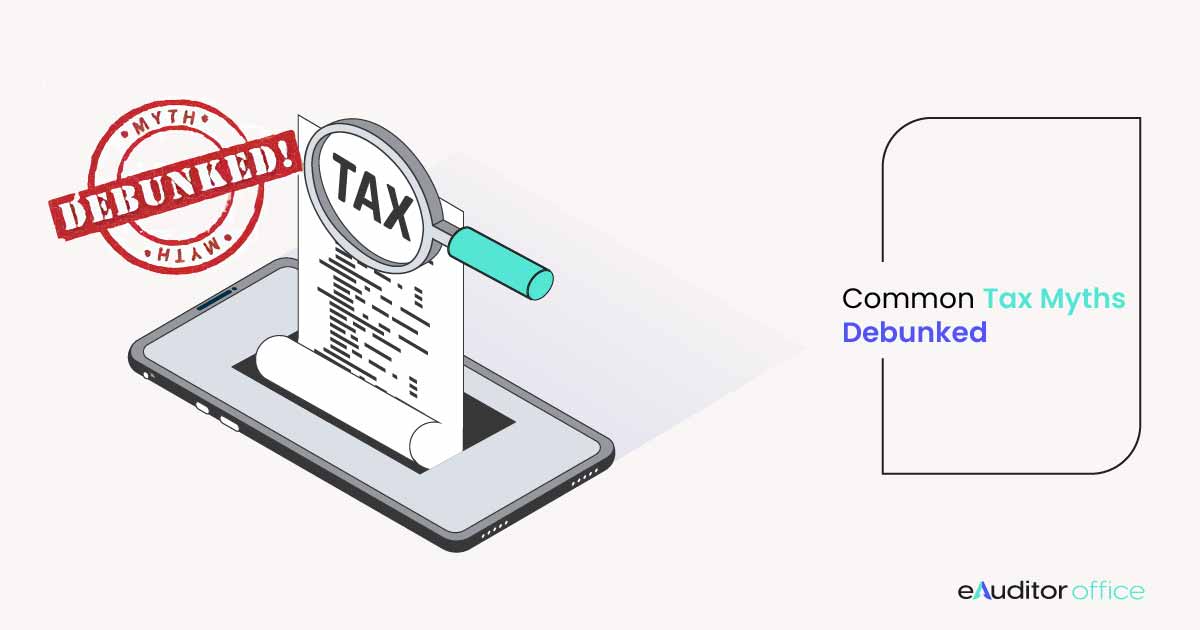
Filing income tax returns is an important responsibility for every Indian citizen who earns taxable income. However, there are several misconceptions and myths surrounding income tax returns in India. Believing in these myths can lead to incorrect tax decisions by taxpayers. This can eventually lead to penalties, fines, and even legal action by the Income Tax Department. Therefore, what’s important here is the clarity surrounding such income tax myths. Let’s debunk some of the most common tax myths in India and provide accurate information to help taxpayers file their returns with confidence.
6 Myths Surrounding Income Tax Return Filing
Here are the 6 most common misconceptions or myths that people fall prey to when it comes to income tax returns in India:
Myth #1: You only need to file a tax return if you owe taxes
Many people believe that they only need to file an income tax return if they owe taxes to the government. However, this is not true. If your total income for the financial year exceeds the basic exemption limit, you are required to file a tax return, regardless of whether you owe any tax or not. The basic exemption limit varies depending on the age and the income tax regime chosen by the taxpayer (after Budget 2023).
Read More: Nirmala Sitharaman Union Budget | Budget 2023 Highlights
For example, for the financial year 2022-23, the basic exemption limit for individuals under 60 years of age is Rs. 2.5 lakh. For those 60 years of age or above and under 80 years, this limit is Rs. 3 lakhs. Further, individuals of age 80 years and above are considered super senior citizens. The basic exemption limit for them is Rs. 5 lakhs. However, it should be kept in mind that this limit is only for individuals. HUFs are also provided a basic exemption limit of Rs. 2.50 lakhs.
Myth #2: You can deduct anything you want on your tax return
Another common myth is that you can deduct anything you want on your tax return for tax write off. While it’s true that there are several deductions and exemptions available under the Income Tax Act, you cannot claim deductions for expenses that are not eligible as per the law. For example, you cannot claim a deduction for personal expenses, such as your phone bills, rent, or grocery expenses etc.
Also, some deductions are allowed subject to certain conditions and up to a certain threshold limit for tax write off. It is important to be aware of such conditions and threshold limit before claiming deductions as it directly impacts your tax liability. If you claim excessive deductions, then you might be liable to pay the tax demand by the income tax department along with the applicable interest and penalty.
Myth #3: Filing a tax extension means you don’t have to pay your taxes until later
Facts about taxes in India is that there are multiple due dates for filing income tax returns. If you missed the original due date, you can still file the belated return. Even if you miss the belated return due date, you can furnish an updated return or go for condonation of delay. Condonation of delay gives power to the tax authorities to condone the delay in filing of return or e-verification if the delay was due to genuine reasons.
Read More: Delay in Income Tax Refund – Causes and Action Plans
Many taxpayers believe that filing a tax extension allows them to delay paying their taxes until a later date. However, this is not true. Filing a tax extension only gives you more time to file your tax return; it does not extend the due date for paying your taxes. If you owe taxes, you must pay them within the original due date, i.e., July 31st of the assessment year, to avoid penalties and interest.
Myth #4: You can’t be audited if you file your taxes electronically
One of the most common income tax myths in India is that taxpayers who file their returns electronically are less likely to be audited. However, the truth is that the Income Tax Department can audit both electronically filed and paper-filed tax returns. In fact, income tax filings are shifted to online electronic mode entirely. Paper-based tax filing is allowed only in certain exceptional cases.
Auditing is a process through which the Income Tax Department verifies the accuracy and authenticity of the information provided in a tax return. It is conducted to ensure that taxpayers are complying with the tax laws and regulations, have claimed no undue exemptions and deductions and has disclosed all their income details accurately. Here’s a great income tax fact – the selection of a tax return for audit is done through a computer-based system that uses certain parameters such as high-value transactions, cash deposits, and discrepancies in the tax return.
Therefore, taxpayers should not assume that electronic filing of tax returns means they will not be audited. They should ensure that they maintain proper documentation to support the information provided in their tax returns. The income tax department has the right to open scrutiny or audits if they find anything unusual, questionable, suspicious or requires any clarity in the information provided by the taxpayers.
Myth #5: Tax refunds are free money from the government
Another common myth in India is that tax refunds are free money given by the government. In reality, tax refunds are the excess amount of tax paid by a taxpayer during the financial year. The Income Tax Department refunds this amount to the taxpayer after verifying the tax return and adjusting the same against any tax liability that arises.
For example, if your tax liability is Rs. 50,000 but you have paid Rs. 60,000 as tax, then you are entitled to a refund of Rs. 10,000. The amount of Rs. 60,000 paid as tax by you can include advance tax, self-assessment tax, TDS, TCS or any other tax amount that you paid before filing your income tax returns. Therefore, taxpayers should view tax refunds as a return of their own money and not as a windfall from the government. That’s the reason they are known as a refund
Myth #6: Hiring a tax professional is a waste of money
Many taxpayers believe that hiring a tax professional is an unnecessary expense and that they can file their tax returns on their own. However, tax laws and regulations in India can be complex and ever-changing, making it difficult for taxpayers to keep up with them. There are numerous provisions under the income tax law that interplay together when filing tax returns. It is important to have a thorough knowledge of these income tax provisions and rules to ensure that not only do you furnish accurate information but also take advantage of various deductions and exemptions available for the benefit of the taxpayers.
Hiring a tax professional can help taxpayers avoid mistakes and ensure that their tax returns are accurate and compliant with the tax laws. A tax professional can also help taxpayers maximise their deductions and exemptions, which can result in significant tax savings. For proper tax planning, it is important to have proper taxation knowledge. Therefore, taxpayers should consider hiring a tax professional, especially if they have complex financial situations or are unsure about tax laws and regulations. This can save a huge amount in terms of penalties and interest in case of incorrect filing of returns.
Don’t Fall for these Tax Myths!
Taxpayers in India should be aware of these common tax myths to avoid confusion and mistakes. It was important to get those tax myths debunked so that the taxpayers file their tax returns accurately and on time to avoid penalties and fines. They should also seek professional help if they have complex financial situations or are unsure about tax laws and regulations. This will not only help them file accurate and timely returns but also save a lot in terms of taxes, interest and penalties. In case you have any more concerns regarding return filing in India or want to know more interesting tax facts, feel free to contact the eAuditor Office