Overview of Permanent Account Number (PAN) in India
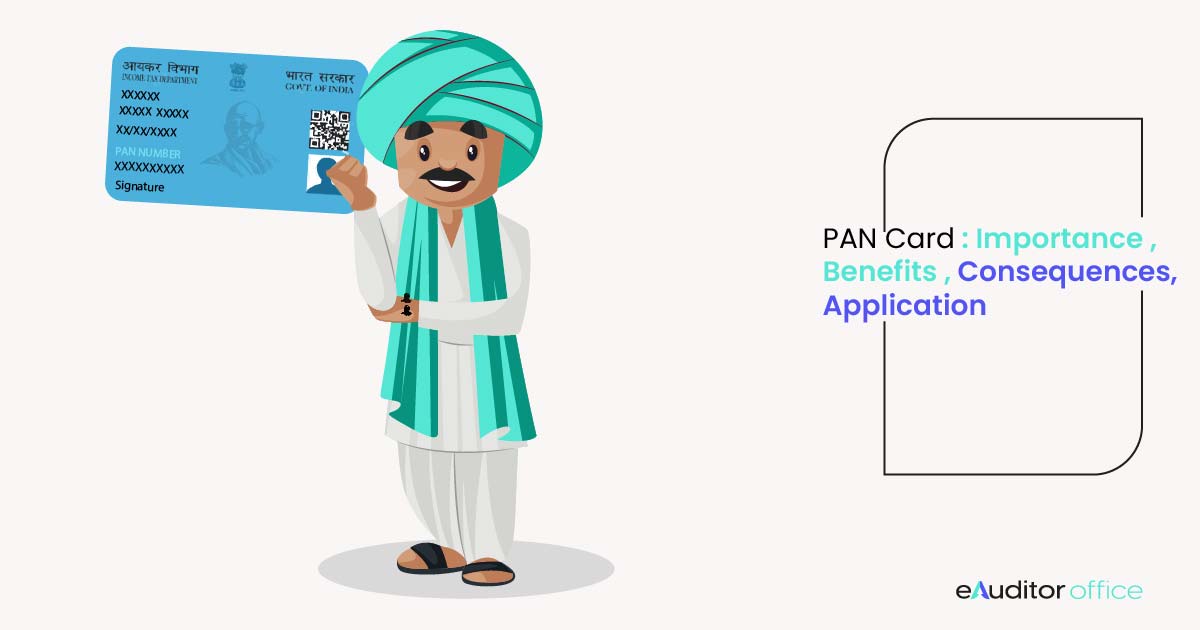
Permanent Account Number (PAN) is a unique, 10-digit alphanumeric identifier assigned to individuals, companies, and other entities by the Income Tax Department of India. PAN is an essential document for tax purposes in India and plays a vital role in the process of tax administration and compliance in the country.
PAN was introduced in India in 1972 with the aim of creating a centralised database of taxpayers and tax transactions. Over the years, PAN has become a mandatory requirement for various financial transactions, including opening a bank account, buying or selling immovable property, investing in securities, and many others. It is the identification number through which the income tax department identifies the taxpayers in India. Let’s understand the importance and advantages of PAN cards for Indian citizens.
Importance of PAN Card for Tax Purposes
The Importance of PAN card for Tax Purposes in India can be understood in the following points:
1.Unique Identifier for Income Tax Purpose
PAN is a crucial tool for the government to monitor and track the tax compliance of individuals and organisations. It enables the Income Tax Department to keep a record of all the tax-related transactions of a taxpayer and ensure that all tax liabilities are paid on time.
2.Tracking Financial Transactions
PAN card importance can be understood by the fact that it helps to prevent tax evasion by ensuring that all tax-related transactions are recorded and tracked. It also enables the government to identify taxpayers who may be evading taxes and take appropriate action against them. PAN is mandatory for a number of high-value financial transactions. This intimates the income tax department of such transactions and helps to prevent tax evasion and ensure that all relevant tax liabilities are paid on time.
3.Linking With Tax Records
As stated earlier, PAN is the sole identifier under the income tax administration. Therefore, all your financial transactions above a certain threshold that have a bearing on your income or taxation are linked to your PAN. This ensures complete transparency in the tax records of the citizens at large.
Benefits of PAN Card in India
There are numerous benefits of PAN cards for the government as well as citizens. This includes:
1.Simplifies the Tax Filing Process
With the help of PAN, the government can keep a centralised database of taxpayers, which helps in improved tax administration. This enables the government to process and monitor tax returns and tax payments more efficiently and effectively.
2.Easy Transfer of Tax Credits
PAN is a unique identifier that remains the same even if an individual changes his/her address or switches jobs. This helps to ensure that the tax credits accumulated by an individual can be easily transferred from one job to another, which is particularly useful for individuals who are frequently on the move.
3.Helps Avoid Errors and Miscommunications with Income Tax Authorities
Another major PAN card benefit is that it helps in avoiding errors and miscommunications with the income tax authorities. As the financial transactions are getting linked with the PAN, the income tax authorities have accurate and updated information regarding the income and financial transactions of the taxpayers.
Consequences of Not Having PAN
Barring certain exceptional situations, the income tax law has mandated obtaining PAN for income tax purposes in India. Not having PAN can have certain adverse consequences that include:
1.Unable to file Income Tax Returns
All taxpayers have to register themselves on the income tax portal. PAN acts as the user ID for the same. If you do not have a PAN, you cannot file your income tax returns, which is mandatory for all individuals who have taxable income. Further, if you have paid more taxes than your tax liability, you can claim a refund of the excess tax paid. However, you cannot claim the refund without a PAN.
2.Increased Chances of Tax-Related Frauds
PAN acts as the transaction tracking tool for the income tax department. In case a person engages in financial transactions without obtaining PAN, then it leads to tax evasion and tax-related fraud. This can have adverse consequences under the income tax law and can attract stringent penalties.
3.Consequences for Non-Compliance
The government has specified certain conditions where obtaining PAN becomes mandatory. If you satisfy any of these conditions and fail to apply pancard online, you may be penalised by the Income Tax Department.
How PAN Makes Filing Taxes Simpler and More Efficient?
The government is striving hard to make tax filing simpler and more efficient and PAN is playing an active role in ensuring the same. Here’s how PAN is making filing taxes simpler and more efficient:
1.AIS and TIS
The government released the Annual Information Statement (AIS) and Taxpayer Information Statement (TIS) which shows the details of most of the financial transactions undertaken by taxpayers in India. This helps income tax returns filing as the taxpayers have all the information of their financial transactions and income consolidated at a single portal. Further, it also increases transparency as the government is assured that all the income details are disclosed by the taxpayers.
2.TDS and Form 26AS
Tax Deducted at Source (TDS) is a kind of advance tax paid to the government. The government has inserted TDS provisions whereby if a transaction exceeds a certain threshold, then the payer of the income is required to deduct TDS and pay it to the government. This transaction is reflected in Form 26AS of the recipient of income. The amount of TDS deducted can be claimed as a refund after adjusting any tax due by the recipient by filing his income tax return.
Advantages of PAN Card for Tax Planning and Budgeting
PAN helps in tracking all financial transactions such as salary, investments, expenses, and taxes paid. Taxpayers can view these transactions through Annual Information Statement, Taxpayer Information Statement and Form 26AS. Further, PAN facilitates timely tax payments by ensuring that taxpayer is aware of their tax liability and can plan accordingly. This helps in avoiding penalties and interest charges for late payments. PAN assists in claiming various tax benefits and deductions available under the Income Tax Act. It ensures that taxpayers can avail of all tax benefits available to them, thereby reducing their tax liability.
How PAN Protects You from Tax-Related Frauds and Misuse?
PAN is the principal identity proof under income tax law. Further, in the case of most financial transactions, quoting of PAN has become mandatory. However, being a government identity proof, it is important that the PAN details are protected to maintain confidentiality and prevent misuse. The government prevents identity theft through PAN by displaying only the last 4 digits of the PAN on its portal.
Further, the payer of income can always ask for the PAN of the recipient for the purpose of deducting TDS. Similarly, the recipient of income can ask the payer of income for his PAN for the purpose of collecting TCS. The recipient and the payer can check on their income tax login whether the counterparty has reported the transaction and paid the amount of TDS/TCS to the government. This ensures that the financial transaction is reported to the government and there are no tax-related frauds with the government as well as with the counterparty.
The Role of PAN in the Future of Taxation in India
The role of PAN (Permanent Account Number) in the future of taxation in India is expected to be significant. Here are some of the ways in which PAN is likely to play a crucial role in the future of taxation in India:
- Expansion of Tax Base: PAN is a unique identification number for taxpayers and helps in expanding the tax base by identifying and tracking taxpayers who are liable to pay taxes. The government is likely to continue using PAN for expanding the tax base in the future.
- Digitisation of Tax Administration: The government is moving towards digitisation of tax administration, and PAN plays a crucial role in this process. PAN enables the Income Tax Department to track and verify financial transactions digitally, making the process more efficient. More and more transactions are getting linked to the PAN thus ensuring complete transparency and reporting of the financial transactions undertaken by the taxpayers.
- Simplification of Tax Filing: The government is focusing on simplifying the process of tax filing, and PAN plays a vital role in this process. PAN provides a unique identification number to taxpayers, making it easier to file tax returns and claim tax benefits.
- Prevention of Tax Evasion: A significant portion of the government’s revenue is generated from direct taxes. PAN helps in preventing tax evasion by enabling the Income Tax Department to track and verify financial transactions. The government is likely to continue using PAN to prevent tax evasion in the future.
Conclusion
PAN plays a crucial role in the tax administration and compliance system in India. It helps the government to monitor and track tax compliance, improve tax administration, prevent tax evasion, and ensure that all relevant tax liabilities are paid on time. PAN is also a mandatory requirement for a number of high-value transactions, making it an essential document for individuals and organisations in India. Thus, obtaining PAN has become more of a necessity than a choice. In case you need any assistance in PAN or income tax related issues, feel free to contact the eAuditor Office