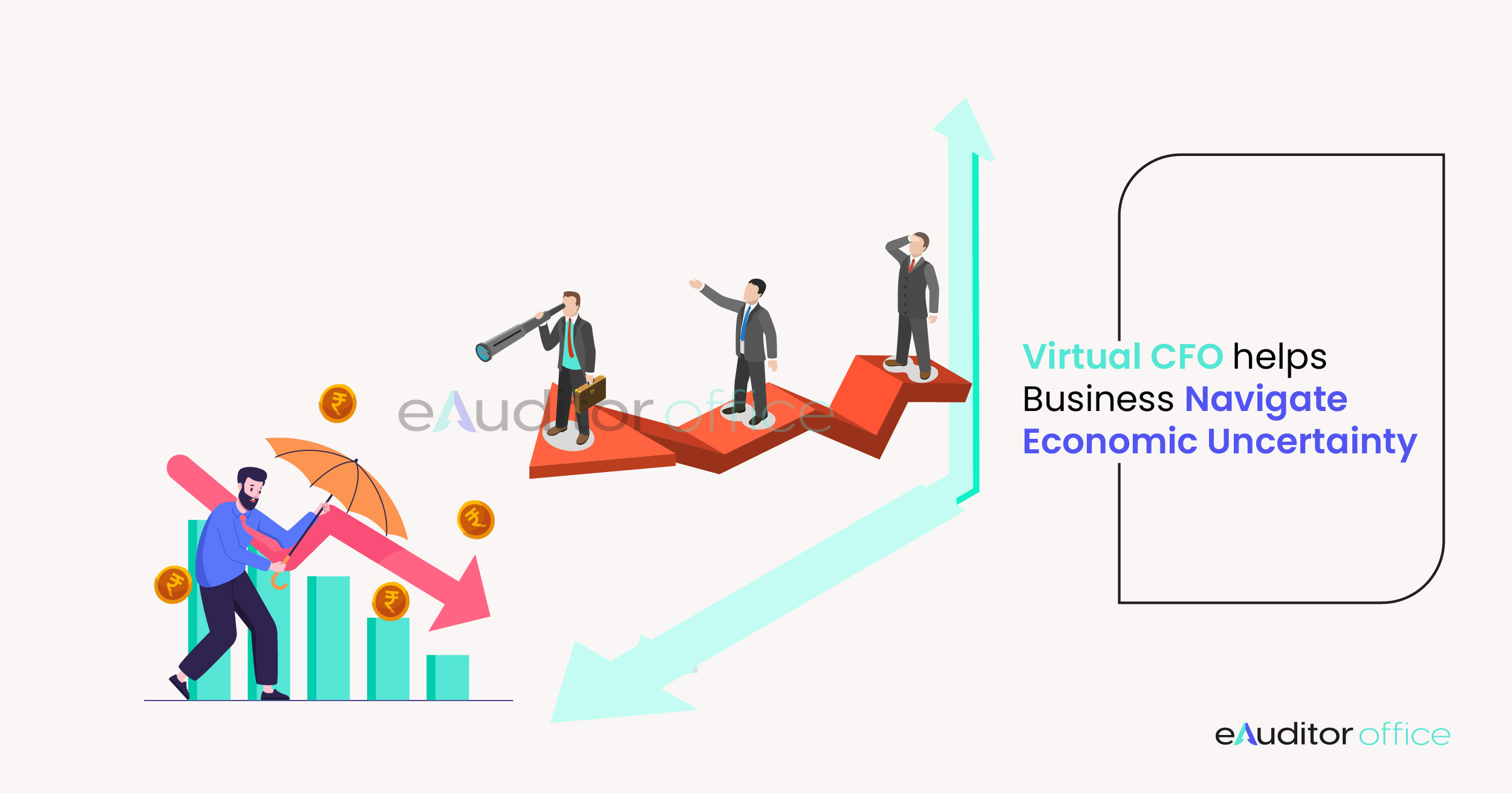
How Virtual CFOs Help Businesses Navigate Economic Uncertainty
Introduction
In today’s dynamic business landscape, economic uncertainty has become the norm rather than the exception. From global pandemics to geopolitical tensions, businesses of all sizes face challenges that can disrupt their financial stability. Amidst this volatility, the role of a Chief Financial Officer (CFO) has become more critical than ever. However, not every business can afford a full-time CFO. This is where Virtual CFOs come into play. In this comprehensive blog, we’ll explore how Virtual CFOs help businesses navigate economic uncertainty, offering expertise and stability in turbulent times.
Understanding Economic Uncertainty
Economic uncertainty can stem from various sources:
- Global Events: Pandemics, wars, and natural disasters can have far-reaching impacts.
- Market Fluctuations: Stock market volatility, interest rate changes, and currency fluctuations can affect business operations.
- Regulatory Changes: New laws and regulations can introduce unforeseen challenges and costs.
- Technological Disruptions: Rapid technological advancements can render existing business models obsolete.
Businesses need to be agile and resilient to survive and thrive amidst these uncertainties. A Virtual CFO can provide the strategic guidance necessary to navigate these challenges.
The Role of a Virtual CFO
A Virtual CFO is a financial expert who provides high-level financial management and strategic planning services on a part-time or contractual basis. Unlike traditional CFOs, Virtual CFOs offer flexibility and cost-effectiveness, making them an ideal solution for small and medium-sized enterprises (SMEs).
Key Responsibilities of a Virtual CFO
Financial Planning and Analysis (FP&A): Virtual CFOs analyze financial data to forecast future financial performance. This includes budgeting, financial modeling, and scenario planning.
Cash Flow Management: Maintaining healthy cash flow is crucial during economic uncertainty. Virtual CFOs ensure that businesses have sufficient liquidity to meet their obligations.
Risk Management: Identifying and mitigating financial risks is a core responsibility. Virtual CFOs develop risk management strategies to safeguard the business.
Cost Optimization: They help businesses streamline operations and reduce costs without compromising quality or efficiency.
Strategic Planning: Virtual CFOs work closely with business owners to develop long-term strategies that align with their goals and market conditions.
Regulatory Compliance: Ensuring compliance with local, national, and international regulations is essential. Virtual CFOs keep businesses compliant and avoid costly penalties.
How Virtual CFOs Help Navigate Economic Uncertainty
1. Proactive Financial Planning
Economic uncertainty requires businesses to be proactive rather than reactive. Virtual CFOs use advanced financial modeling techniques to predict various economic scenarios and their potential impact on the business. This foresight allows businesses to prepare for different outcomes and make informed decisions.
Example: During the COVID-19 pandemic, businesses with proactive financial planning were able to pivot quickly, manage their cash flow effectively, and sustain operations despite the downturn.
2. Enhancing Cash Flow Management
Cash flow is the lifeblood of any business. During uncertain times, maintaining a healthy cash flow becomes even more critical. Virtual CFOs implement robust cash flow management practices, such as:
Example: A Virtual CFO helped a manufacturing company improve its cash flow by renegotiating payment terms with suppliers and accelerating receivables, ensuring the business remained solvent during an economic downturn.
3. Mitigating Financial Risks
Economic uncertainty amplifies financial risks. Virtual CFOs identify these risks and develop strategies to mitigate them. Common risk management techniques include:
Example: A Virtual CFO worked with an export-oriented business to hedge against currency risks, protecting its profits from adverse exchange rate movements.
4. Strategic Cost Optimization
During economic uncertainty, businesses must optimize costs without compromising their competitive edge. Virtual CFOs conduct thorough cost analyses to identify areas for improvement. They focus on:
Example: A Virtual CFO assisted a tech startup in reducing operational costs by outsourcing non-core activities, allowing the company to focus on innovation and growth.
5. Guiding Strategic Planning
Long-term strategic planning is essential for navigating economic uncertainty. Virtual CFOs collaborate with business owners to develop robust strategies that align with their vision and market conditions. Key aspects include:
Example: A Virtual CFO helped a retail chain expand into new markets by analyzing consumer trends and developing a tailored market entry strategy.
6. Ensuring Regulatory Compliance
Economic uncertainty often brings regulatory changes. Staying compliant with evolving regulations is crucial to avoid penalties and reputational damage. Virtual CFOs ensure businesses adhere to all relevant regulations, including:
Example: A Virtual CFO assisted a healthcare company in navigating complex regulatory changes, ensuring compliance and avoiding costly fines.
The Advantages of Hiring a Virtual CFO
1. Cost-Effectiveness
Hiring a full-time CFO can be prohibitively expensive for many SMEs. Virtual CFOs offer a cost-effective alternative, providing high-level expertise at a fraction of the cost.
2. Flexibility
Virtual CFOs offer flexible engagement models, allowing businesses to scale their services up or down based on their needs. This flexibility is particularly valuable during economic uncertainty.
3. Access to Expertise
Virtual CFOs bring a wealth of experience and knowledge to the table. They have worked with various businesses across different industries, providing insights and best practices that can benefit your business.
4. Focus on Core Competencies
By delegating financial management to a Virtual CFO, business owners can focus on their core competencies and strategic priorities, driving growth and innovation.
Choosing the Right Virtual CFO for Your Business
1. Assess Your Needs
Identify the specific financial challenges and opportunities your business faces. This will help you determine the skills and expertise you need in a Virtual CFO.
2. Check Credentials
Ensure the Virtual CFO has the necessary qualifications, such as CPA, CMA, or CFA. Additionally, review their experience and track record in your industry.
3. Evaluate Communication Skills
Effective communication is crucial for a successful partnership. Ensure the Virtual CFO can explain complex financial concepts in a clear and understandable manner.
4. Consider Cultural Fit
The Virtual CFO should align with your company’s values and culture. A good cultural fit will foster a collaborative and productive working relationship.
5. Review Technology Proficiency
Virtual CFOs often use advanced financial software and tools. Ensure they are proficient in the technology platforms your business uses.
Real-Life Success Stories
Case Study 1: Navigating a Market Downturn
A mid-sized manufacturing company faced a significant market downturn due to global economic instability. The company hired a Virtual CFO who:
As a result, the company not only survived the downturn but emerged stronger, with improved financial stability and operational efficiency.
Case Study 2: Expanding into New Markets
A retail business aimed to expand into new markets but lacked the financial expertise to develop a robust expansion strategy. A Virtual CFO provided:
- Market analysis and entry strategy development.
- Financial modeling to forecast potential outcomes.
- Strategic planning and resource allocation guidance.
The business successfully entered new markets, achieving substantial growth and increased market share.
Conclusion
In an era of economic uncertainty, the expertise and strategic guidance of a Virtual CFO can be invaluable. From proactive financial planning to risk management and cost optimization, Virtual CFOs equip businesses with the tools and insights needed to navigate turbulent times successfully. By hiring a Virtual CFO, businesses can achieve financial stability, make informed decisions, and position themselves for long-term success.