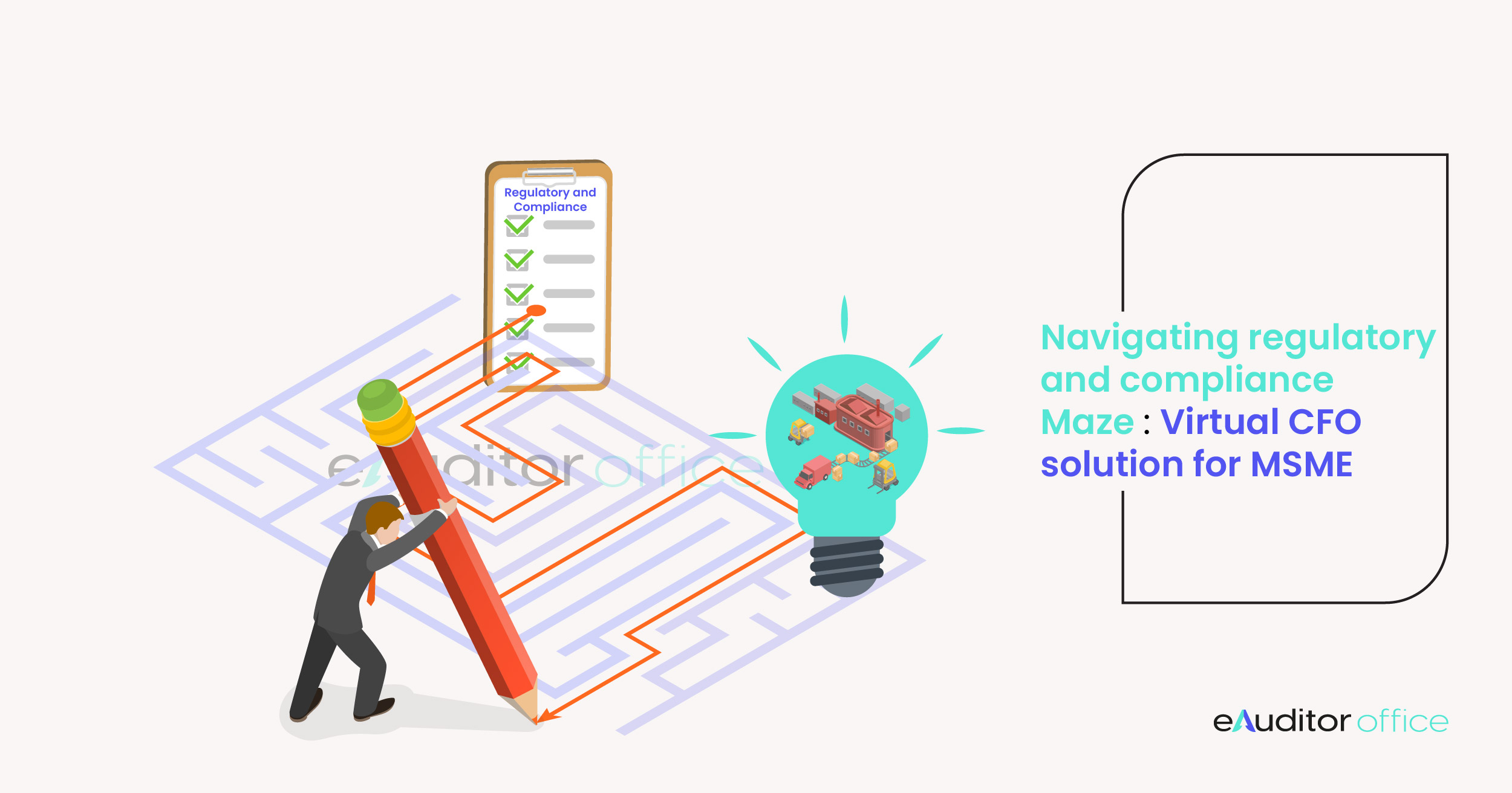
Navigating the Regulatory and Compliance Maze: Virtual CFO Solutions for MSMEs
In today’s dynamic business environment, navigating the labyrinth of regulatory and compliance requirements can be a daunting task for Micro, Small, and Medium Enterprises (MSMEs). As businesses strive to stay afloat, keeping up with ever-changing regulations and ensuring compliance can feel overwhelming. Enter the Virtual Chief Financial Officer (CFO), a game-changer that can provide much-needed support to MSMEs in this complex landscape.
Understanding the Regulatory and Compliance Landscape
Regulatory compliance involves adhering to laws, regulations, guidelines, and specifications relevant to your business operations. Non-compliance can result in legal penalties, fines, and reputational damage. For MSMEs, the challenge is twofold: understanding the regulations and implementing systems to ensure compliance.
In India, MSMEs face an array of regulations including the Goods and Services Tax (GST), the Companies Act, labor laws, environmental regulations, and industry-specific guidelines. Navigating these regulations requires expertise and resources that many MSMEs may lack.
The Role of a Virtual CFO
A Virtual CFO is an outsourced service provider offering high-level financial strategy, system analysis, and operational optimization. Unlike traditional CFOs, Virtual CFOs work remotely and provide services on a part-time or project basis, making them cost-effective for MSMEs.
Key Benefits of a Virtual CFO for MSMEs:
- Expertise in Compliance: Virtual CFOs bring in-depth knowledge of regulatory requirements, helping MSMEs stay compliant with ease.
- Cost-Effective Solutions: MSMEs can access top-tier financial expertise without the overhead costs of a full-time CFO.
- Scalability: Services can be scaled up or down based on the business’s needs, offering flexibility.
- Strategic Financial Planning: Beyond compliance, Virtual CFOs assist in financial planning, budgeting, and forecasting to drive business growth.
- Risk Management: Identifying and mitigating financial risks is crucial, and Virtual CFOs are adept at this task.
Common Compliance Challenges Faced by MSMEs
- Complex Taxation System: Understanding and complying with GST and other taxes can be complex.
- Labor Law Compliance: Ensuring adherence to various labor laws including wages, working hours, and employee benefits.
- Environmental Regulations: Industries with environmental impacts must comply with stringent regulations.
How Virtual CFOs Help Navigate These Challenges
Tax Compliance
India’s taxation system is intricate, with frequent updates and changes. Virtual CFOs keep abreast of these changes and ensure that MSMEs comply with all tax regulations. They handle GST filings, income tax returns, and other statutory requirements, reducing the risk of penalties and audits.
Labor Law Compliance
Virtual CFOs help businesses adhere to labor laws by implementing systems for accurate payroll processing, employee benefits administration, and compliance reporting. This not only ensures legal compliance but also fosters a positive work environment.
Environmental Regulations
For businesses with environmental impacts, Virtual CFOs assist in maintaining compliance with regulations related to waste management, emissions, and sustainability reporting. They help develop and implement environmental management systems that align with regulatory requirements.
Industry-Specific Regulations
Virtual CFOs bring specialized knowledge of industry-specific regulations. Whether it’s pharmaceuticals, manufacturing, or IT, they tailor their services to meet the unique compliance needs of each industry.
Case Study: Virtual CFO Success in MSMEs
Case Study 1: XYZ Manufacturing
XYZ Manufacturing, a small enterprise in Coimbatore, struggled with compliance issues, particularly with GST and labor laws. The frequent changes in GST regulations led to errors in filings and hefty fines. Labor law compliance was another pain point, with the company facing challenges in maintaining accurate payroll records.
The company engaged a Virtual CFO from eAuditor Office, who conducted a thorough compliance audit. The Virtual CFO streamlined the GST filing process, ensuring timely and accurate submissions. They also implemented a robust payroll system, ensuring adherence to labor laws and reducing administrative overhead.
As a result, XYZ Manufacturing not only achieved compliance but also saw a significant reduction in fines and administrative costs. The Virtual CFO’s strategic financial advice further helped the company optimize cash flow and improve profitability.
Embracing Technology for Compliance
The advent of technology has revolutionized the way businesses manage compliance. Virtual CFOs leverage advanced tools and software to ensure seamless compliance management.
Cloud-Based Accounting
Cloud-based accounting platforms provide real-time access to financial data, enabling Virtual CFOs to monitor compliance status and make informed decisions. These platforms offer automated compliance features, reducing the risk of errors and omissions.
Compliance Management Software
Compliance management software helps track regulatory changes and ensures that businesses stay updated. Virtual CFOs use these tools to automate compliance tasks, generate reports, and maintain records.
Data Analytics
Data analytics tools provide insights into financial performance and compliance status. Virtual CFOs use analytics to identify compliance gaps and develop strategies to address them.
The Future of Compliance Management
As regulations continue to evolve, the role of Virtual CFOs in compliance management will become increasingly vital. The integration of artificial intelligence (AI) and machine learning (ML) in compliance management tools will further enhance their capabilities.
AI and ML in Compliance
AI and ML can automate complex compliance tasks, such as risk assessment and fraud detection. These technologies can analyze vast amounts of data to identify patterns and anomalies, providing early warnings of potential compliance issues.
Blockchain for Transparency
Blockchain technology offers a transparent and immutable record of transactions, ensuring accountability and traceability. Virtual CFOs can leverage blockchain to enhance the accuracy and reliability of financial records.
Choosing the Right Virtual CFO
Selecting the right Virtual CFO is crucial for effective compliance management. MSMEs should consider the following factors:
- Experience and Expertise: Look for Virtual CFOs with a proven track record in your industry.
- Technology Proficiency: Ensure they are adept at using advanced compliance management tools.
- Customized Solutions: Choose a Virtual CFO who offers tailored solutions to meet your specific compliance needs.
- Reputation and References: Check their reputation and seek references from other businesses.
Conclusion: Transforming Compliance Challenges into Opportunities
For MSMEs, navigating the regulatory and compliance maze can be challenging. However, with the right support from a Virtual CFO, these challenges can be transformed into opportunities for growth and success. By ensuring compliance, optimizing financial operations, and leveraging technology, Virtual CFOs play a pivotal role in driving business excellence.
Are you an MSME struggling with compliance and regulatory challenges? Let eAuditor Office help you navigate the complexities with our expert Virtual CFO services. Contact us today at info@eauditoroffice.com to learn how we can tailor our solutions to meet your business needs and drive your success.
By implementing the insights and strategies discussed in this blog, your MSME can stay compliant, avoid penalties, and focus on what you do best—growing your business. Don’t let compliance challenges hold you back. Reach out to eAuditor Office and take the first step towards a streamlined and compliant future.