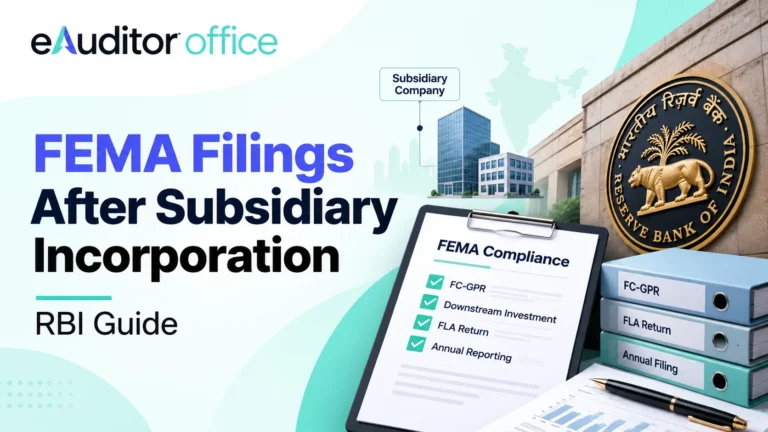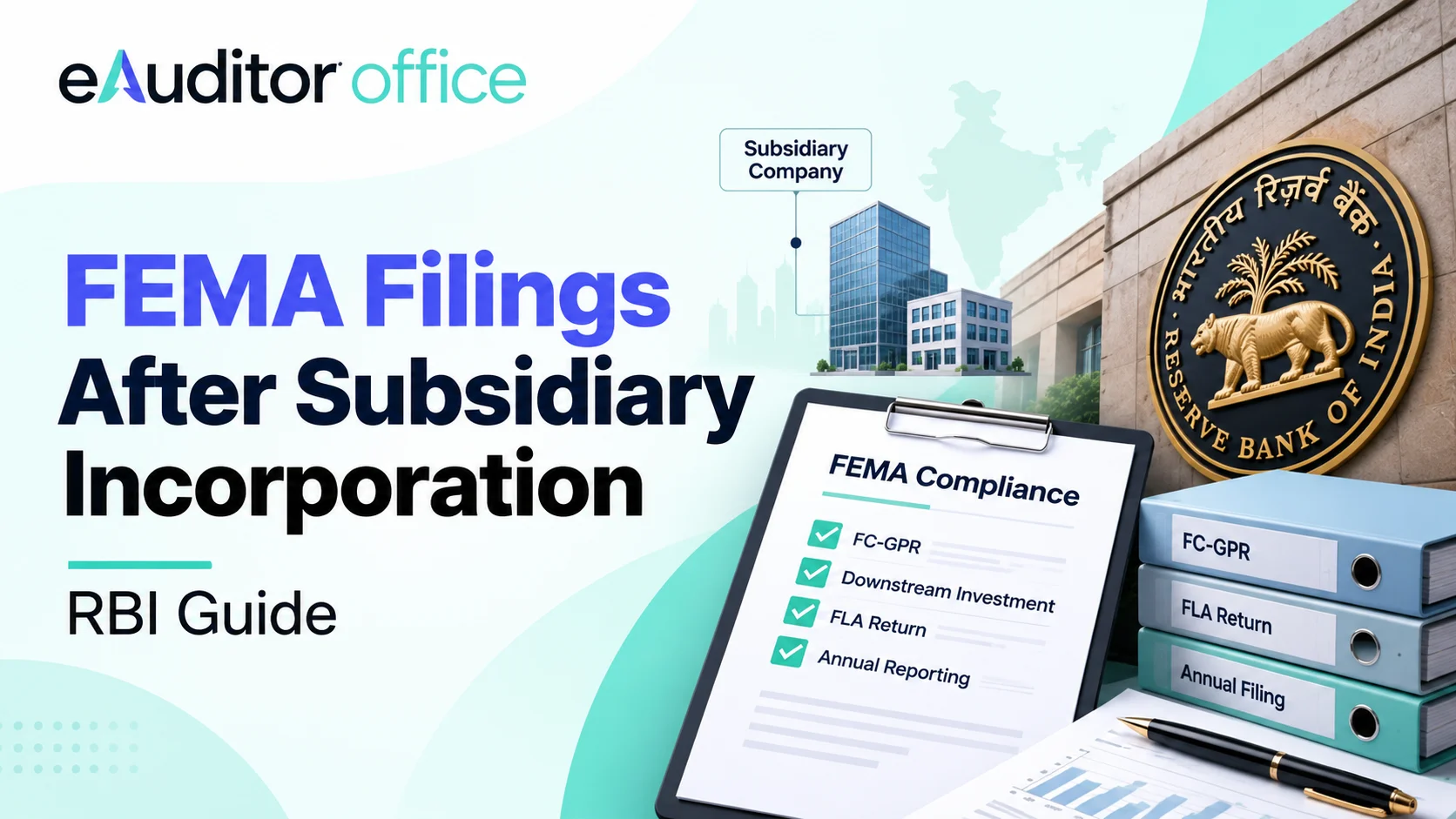
FEMA filings after subsidiary incorporation commonly include FC-GPR for fresh equity issues and the annual Foreign Liabilities and Assets return where applicable. Share transfers, downstream investments and overseas borrowing can create additional reporting obligations.
The challenge is keeping track of the event that starts each deadline. Incorporation, receipt of money, issue of shares and transfer of ownership are different events. A calendar based only on the company’s incorporation date will miss important obligations.
This guide covers an Indian company incorporated as a subsidiary of a foreign parent. It explains how to organise post-incorporation reporting and identify filings that depend on later transactions.
Planning Foreign Subsidiary Incorporation in India? Contact eAuditor Office to discuss your funding structure, post-incorporation checklist and foreign investment reporting requirements.
Why Foreign Subsidiary Incorporation Is Only The Starting Point
A certificate of incorporation establishes the company. The finance team must then connect the investment paperwork, bank records and statutory registers.
Start by asking what the foreign parent intends to provide: equity capital, a loan, payment for services or reimbursement of expenses. These transactions should not be treated as interchangeable simply because the money comes from the same group.
Prepare a funding note before the first remittance. Record the instrument, investor, intended use, supporting agreement and person responsible for compliance.
FEMA Filing Checklist At A Glance
| Filing Or Action | Relevant Trigger | Key Timing |
| FC-GPR | Fresh issue qualifying as FDI | Within 30 days of issue |
| FLA Return | Applicable outstanding FDI/ODI positions | By 15 July |
| FC-TRS | Reportable equity transfer | Within 60 days of transfer or receipt/remittance, whichever is earlier |
| Form DI | Qualifying downstream investment | Within 30 days of equity allotment |
| ECB Registration | Eligible overseas borrowing | Obtain LRN before drawdown |
| ECB-2 | ECB reporting | Monthly; reach RBI within seven working days of month-end |
The transaction determines applicability. This table is a screening tool, not a list of forms every subsidiary must file.
1. Set Up FIRMS Access Before A Filing Becomes Urgent
RBI’s FIRMS platform provides the Single Master Form for foreign investment transaction reporting, including FC-GPR, FC-TRS and Form DI.
Arrange the Entity Master and Business User requirements, authorised signatory documents and coordination with the Authorised Dealer Category-I bank early.
Use a company-controlled email address and maintain a handover record. Portal access should remain available when an employee or external adviser changes.
Ask the bank for its current checklist before collecting documents. A filing prepared from an old checklist may need substantial rework.
2. Track Equity Funding And FC-GPR Separately
FC-GPR reports a fresh issue of equity instruments qualifying as FDI. It does not use the bank-credit date as its filing trigger.
Separately, the general funding rule requires an issue within 60 days of receiving consideration; otherwise refund is due within the following 15 days. For initial memorandum subscriptions, confirm the legally relevant issue date with the company secretary and bank rather than assuming a later board meeting starts the clock.
Keep incorporation documents, subscription records, remittance evidence, investor KYC, approvals and applicable valuation or certification support ready.
Build a reconciliation showing how each receipt connects to the instruments issued. Investigate differences in currency conversion, remitter names or subscription amounts before filing.
3. Put The FLA Return On The Annual Calendar
Review FLA applicability using outstanding FDI or ODI at the relevant current or previous end-March dates. An absence of fresh funding does not automatically remove the obligation.
File through FLAIR. If the audit is unfinished, use provisional figures by the deadline, then request permission and revise promptly after audited figures become available. RBI’s July 2026 FAQs also address companies holding only share application money without outstanding FDI or ODI.
Prepare the foreign shareholder schedule and reconcile it with the accounts before starting the return. Check whether the parent’s figures and the Indian company’s records use the same reporting period.
A useful internal control is to complete an applicability review every April, even when the answer appears unchanged.
4. Review FC-TRS Before Ownership Changes
FC-TRS concerns reportable transfers of existing equity instruments. Reporting responsibility generally rests with the resident transferor or transferee in resident/non-resident transactions.
Before signing, ask the adviser to identify whether reporting applies, who will file and which event starts the deadline.
Keep the transfer agreement, payment evidence, ownership details and applicable pricing support together. Where payment happens in stages, discuss the reporting treatment before agreeing the timetable.
The company should also reconcile its shareholder register after completion.
5. Assess Downstream Investment Before Funding Another Indian Entity
A foreign subsidiary investing in another Indian entity should check whether the investment constitutes indirect foreign investment.
Qualifying investments also require a separate SIA/DPIIT notification within 30 days of investment, even before allotment. Applicable downstream compliance includes an annual statutory auditor certificate and disclosure in the directors’ report.
Create a separate file for each investee. Record the ownership assessment, approvals, funding source and evidence of reporting.
Avoid copying the parent company’s investment analysis without checking the Indian subsidiary’s own facts.
6. Treat Foreign Parent Loans As A Separate Compliance Review
A parent-company loan needs its own analysis under the applicable borrowing framework. Group ownership alone does not establish eligibility.
Where the arrangement qualifies as ECB, coordinate registration and ongoing reporting with the designated bank. Review lender eligibility, maturity, permitted end use and other applicable terms before accepting funds.
Maintain a loan register recording drawdowns, interest, repayments and outstanding balances. Reconcile this register monthly rather than reconstructing it when a return is due.
Changes in borrowing terms should also be referred to the bank and adviser before implementation.
7. Keep A Watchlist For Less Frequent Transactions
Employee equity arrangements, convertible notes and overseas investments deserve a separate applicability check when proposed.
Ask the legal and finance teams to flag these events before documents are signed. The same applies to reorganisations, capital conversions and changes in ownership or control.
Do not assume that the original incorporation review covers every future transaction.
Already incorporated or planning your next funding round? Speak to eAuditor Office about Foreign Subsidiary Incorporation support and a post-incorporation FEMA compliance review.
What To Do If A Filing Is Late
Prepare a factual timeline and identify the missing submission immediately. Ask the bank or adviser to confirm the available regularisation route, including any applicable late submission fee.
A reporting delay and a breach of investment conditions require different analysis. Paying a fee should not be treated as a blanket solution for an otherwise impermissible transaction.
Keep the fee advice, payment evidence, correspondence and final status together.
Build A Calendar Around Transactions
For reliable FEMA filings after subsidiary incorporation, record the trigger date, deadline, owner, documents and final status for each applicable action.
FQAs
No. Start with an applicability assessment. Recurring reporting and transaction-specific filings belong on separate parts of the compliance calendar.
Do not treat an MCA acknowledgement as evidence that the RBI workflow is complete. Track each applicable obligation and retain its own acknowledgement.
No. Review proposed funding and ownership transactions when they arise. An annual review cannot prevent a missed transaction deadline.
Appoint an internal owner and reviewer. External advisers can prepare submissions, but the company should retain access, records and visibility over outstanding actions.