Foreign investment does not always reach an Indian business directly from an overseas investor. In many group structures, a foreign investor first invests in an Indian holding company or subsidiary, which then invests in another Indian entity. That second transaction may be downstream investment and, depending on the ownership and control of the investing entity, indirect foreign investment.
The distinction affects the entry route, sectoral cap, pricing rules and reporting duties. A proper downstream investment FEMA reporting process can prevent delayed filings and approval issues.
What Is Downstream Investment Under FEMA?
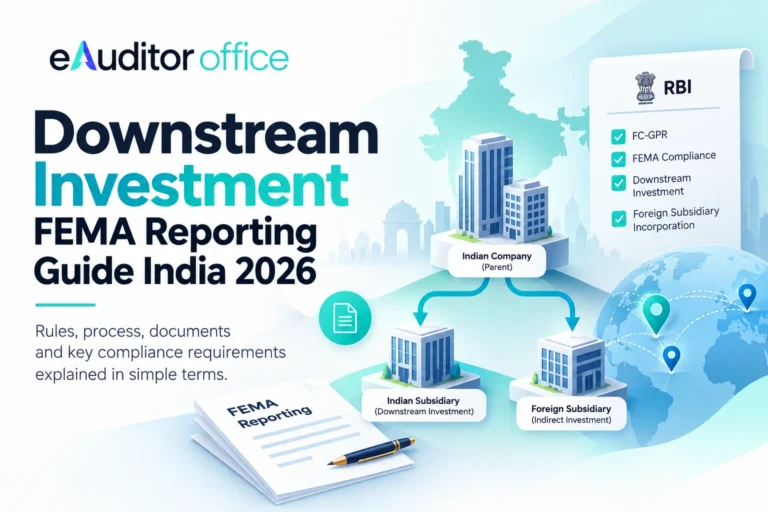
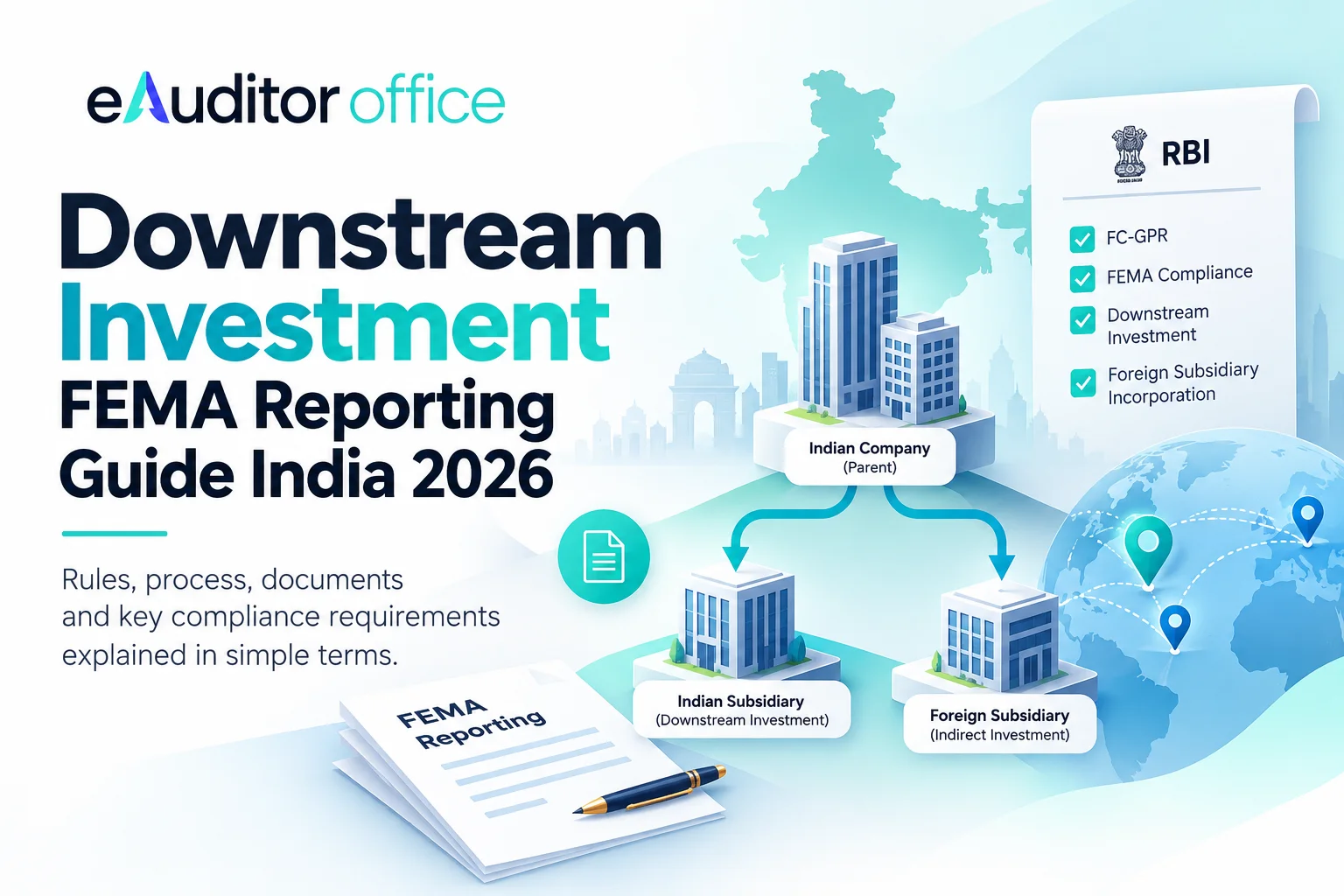
Downstream investment is an investment made by an Indian entity that has received foreign investment, or by an investment vehicle, in the equity instruments or capital of another Indian entity.
For example, a UK company invests in India HoldCo, which later subscribes to shares of an Indian operating company. The second transaction is downstream investment.
Not every downstream investment is automatically indirect foreign investment. The ownership and control of the investing Indian entity must first be tested. Reserve Bank of India
Need Help Setting Up An Indian Entity With Foreign Shareholding? Choose E-Auditor’s Foreign Subsidiary Incorporation support for incorporation, investment structuring and coordinated FEMA compliance. Speak with the team before funds are remitted or downstream investments are planned.
What Is Indirect Foreign Investment?
Indirect foreign investment is downstream investment received by an Indian entity from another Indian entity that:
- has received foreign investment; and
- is not owned and not controlled by resident Indian citizens, or is owned or controlled by persons resident outside India.
Such an investor is commonly called a foreign-owned or controlled company, or FOCC. Ownership generally means beneficial holding of more than 50% of an Indian company’s equity instruments. Control includes the right to appoint a majority of directors or control management or policy decisions.
Investments made by NRIs or OCIs on a non-repatriation basis under the applicable rules are treated as deemed domestic investment. They are not counted while determining indirect foreign investment. Reserve Bank of India
Downstream Investment Vs Indirect Foreign Investment
Downstream investment describes the transaction: an Indian entity with foreign investment invests in another Indian entity. Indirect foreign investment describes the regulatory result when the investing entity meets the foreign ownership or control test.
An Indian company may have foreign investment but remain owned and controlled by resident Indian citizens. Its next investment may be downstream investment without being indirect foreign investment. Form DI applies when the downstream investment is considered indirect foreign investment.
When Is Form DI Required?
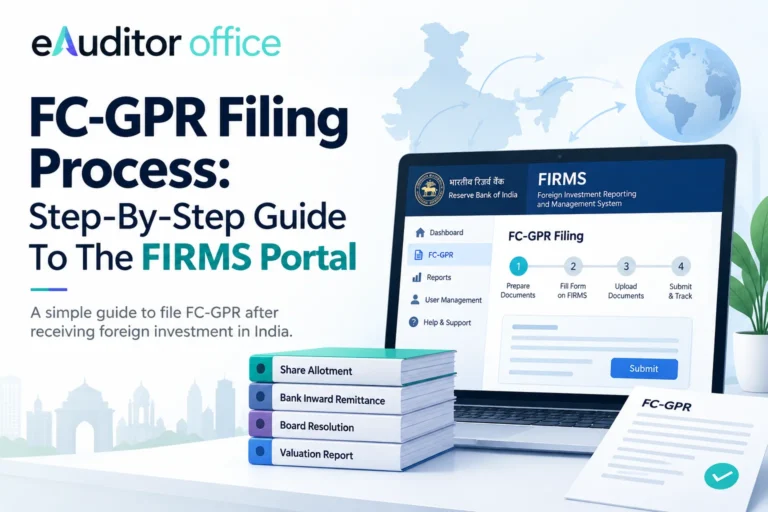
An Indian entity or investment vehicle making qualifying indirect foreign investment must file Form DI with the RBI through the FIRMS portal under the Single Master Form framework.
Form DI must generally be filed within 30 days from the date of allotment of equity instruments. The responsibility sits with the Indian entity or investment vehicle making the downstream investment, not the investee entity. rbi.org.in
Reporting After Reclassification Of The Investor
A filing duty can arise even when the original investment was domestic in character.
If a later foreign funding round changes the ownership or control of an Indian investor, its existing Indian investment may be treated as downstream investment from the reclassification date. The investor must check the entry route and sectoral cap and file Form DI within 30 days.
No fresh allotment occurs in the downstream company. Changes to shareholding, board rights or management control should therefore trigger a review of existing investments. Reserve Bank of India
Main FEMA Conditions For Downstream Investment
Form DI is only one part of compliance. Where the transaction is treated as indirect foreign investment, the following requirements apply.
Entry Route And Sectoral Cap
The investee must comply with the entry route, sectoral cap and FDI-linked conditions applicable to its business. An Indian intermediary cannot be used to bypass direct FDI rules.
If the sector requires government approval, obtain it before completing the investment. Prohibited sectors remain prohibited when the funds are routed through an Indian entity.
Pricing And Valuation
The issue or transfer must follow FEMA pricing and valuation rules and, where relevant, SEBI regulations. All records should use consistent amounts and dates.
Board Approval And Transaction Documents
The investment should have the investing entity’s Board approval and be supported by the shareholders’ agreement, if any. The resolution should record the investee, instrument and amount.
Source Of Funds
The investing entity must not use funds borrowed in the domestic market for downstream investment treated as indirect foreign investment. It may use funds brought from abroad or internal accruals.
In this context, internal accruals mean profits transferred to reserves after payment of taxes. The funding trail should be clear from bank statements and accounting records. Reserve Bank of India
Documents Commonly Needed For Form DI
A practical filing set usually includes:
- Board resolution approving the investment;
- valuation certificate or pricing support, where applicable;
- ownership and control analysis of the investing entity;
- compliance declaration; and
- bank statements supporting the funding source.
Names, dates, consideration and instrument details should match across the form and records.
Planning A Foreign Subsidiary Incorporation In India? E-Auditor can assist with entity setup, foreign investment documentation and post-incorporation FEMA filings so reporting obligations are addressed from the beginning.
Annual Compliance After The Investment
The first-level Indian company making downstream investment is responsible for compliance at the next level and through further downstream layers. It must obtain an annual certificate from its statutory auditor confirming compliance with the downstream investment rules.
The company’s Directors’ Report must also mention compliance with the applicable FEMA provisions. If the statutory auditor issues a qualified report, the matter should be brought immediately to the RBI Regional Office that has jurisdiction over the company’s registered office, and an acknowledgement should be obtained.
Keep the ownership chart, valuation, approvals, filing acknowledgement and funding evidence ready for the annual audit. Reserve Bank of India
Does Form DI Replace Other FEMA Forms?
No. Form DI reports qualifying indirect foreign investment. It does not replace forms triggered by a separate transaction.
A direct issue of equity instruments to a non-resident may require Form FC-GPR, while a transfer between a resident and non-resident may require Form FC-TRS. One funding round can trigger more than one FEMA reporting form.
What Happens If Form DI Is Filed Late?
A reporting delay is a FEMA contravention. The RBI framework allows delayed reports to be regularised through payment of a Late Submission Fee in eligible cases, without going through compounding. The availability and amount of the LSF depend on the transaction and length of the delay.
If LSF is unavailable, compounding may need to be considered after completing the required administrative action. Delays can affect later funding, transfers and due diligence. rbi.org.in
Common Compliance Mistakes
Common errors include checking only the foreign shareholding percentage and ignoring control rights contained in shareholders’ agreements. Businesses may also calculate the 30-day period from the wrong event, use domestic borrowings, miss a later reclassification or assume Form DI covers FC-GPR and FC-TRS.
Before allotment, map the ownership chain, review ultimate control, confirm the investee’s sector and prepare the filing calendar.
Conclusion
Correct downstream investment FEMA reporting starts by testing whether the Indian investor is foreign-owned or controlled. That answer determines whether the investment is indirect foreign investment and whether the investor must follow the relevant FDI route, cap, pricing rules and conditions.
After filing Form DI, keep annual auditor certification, Directors’ Report disclosure and supporting records on the compliance calendar. Reassess ownership and control after every funding round or governance change.
FAQs
The Indian entity or investment vehicle making the qualifying downstream investment files Form DI, not the downstream investee entity.
Form DI must generally be filed within 30 days from allotment. If an existing investment becomes indirect foreign investment because of reclassification, filing is required within 30 days from the reclassification date.
It cannot use domestic borrowed funds for downstream investment treated as indirect foreign investment. Funds brought from abroad and eligible internal accruals may be used, subject to FEMA conditions.
No. The investing entity’s ownership and control must be tested. If it remains owned and controlled by resident Indian citizens, the transaction may be downstream investment without being indirect foreign investment.
Yes. The first-level Indian company must obtain an annual statutory auditor certificate on compliance and mention FEMA compliance in its Directors’ Report.